

Team Elevar

Rural India’s growing aspirations have outpaced its supply chain. Families still travel long distances for basic groceries, facing limited selection and no on-demand retail. For Entrepreneurial Households, this gap is a persistent daily tax on time, income, and quality of life. Wheelocity is building the access rails for rural commerce. Starting with fresh produce as a high-frequency entry point, its hub-and-spoke network deploys over 1,500 EVs as mobile stores, delivering an urban-grade assortment to doorsteps twice daily. Its “Bhuvanesh” partner model equips local gig workers as analytics-led mobile retailers.


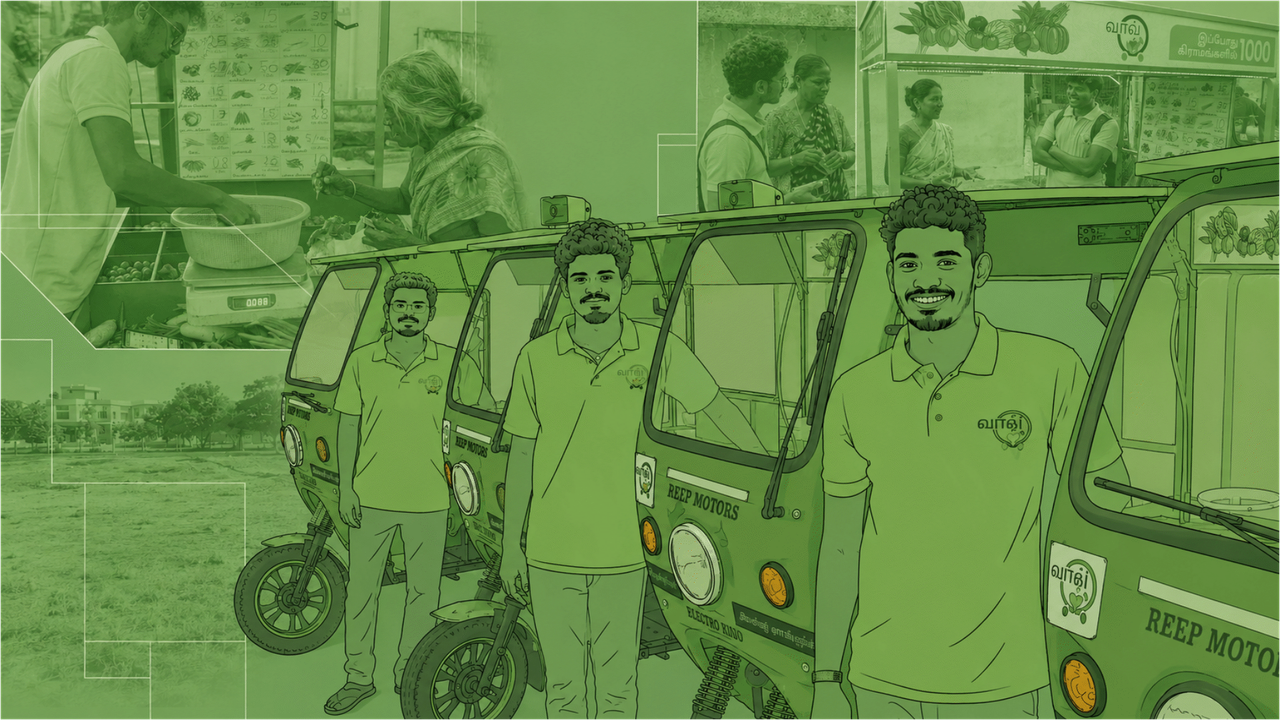
India’s rural economy represents a massive annual consumption market. The demand has been there for years, yet traditional retail and urban e-commerce have consistently failed to crack its unit economics. Our time in the field shapes our broad investment thesis, and the problem Wheelocity is solving is one we had seen for years before we met the company.
Wheelocity operates in remote villages, serving the households we have spent two decades with: Entrepreneurial Households with two or more income sources between them, discerning about quality and willing to pay for it when it is genuinely available with convenience.
To understand why we invested, we must begin with how EHs shop. The nearest mandi is often a few kilometres away, with some running weekly, so fresh produce is never available on demand. A household buys a week’s worth in one trip and often eats the last of it long after it should have been thrown out. The woman who cooks is rarely the one free to, or capable of, making the trip without a vehicle.
Between the travel, the waiting and the waste, this is a daily tax on time, income and quality of life.
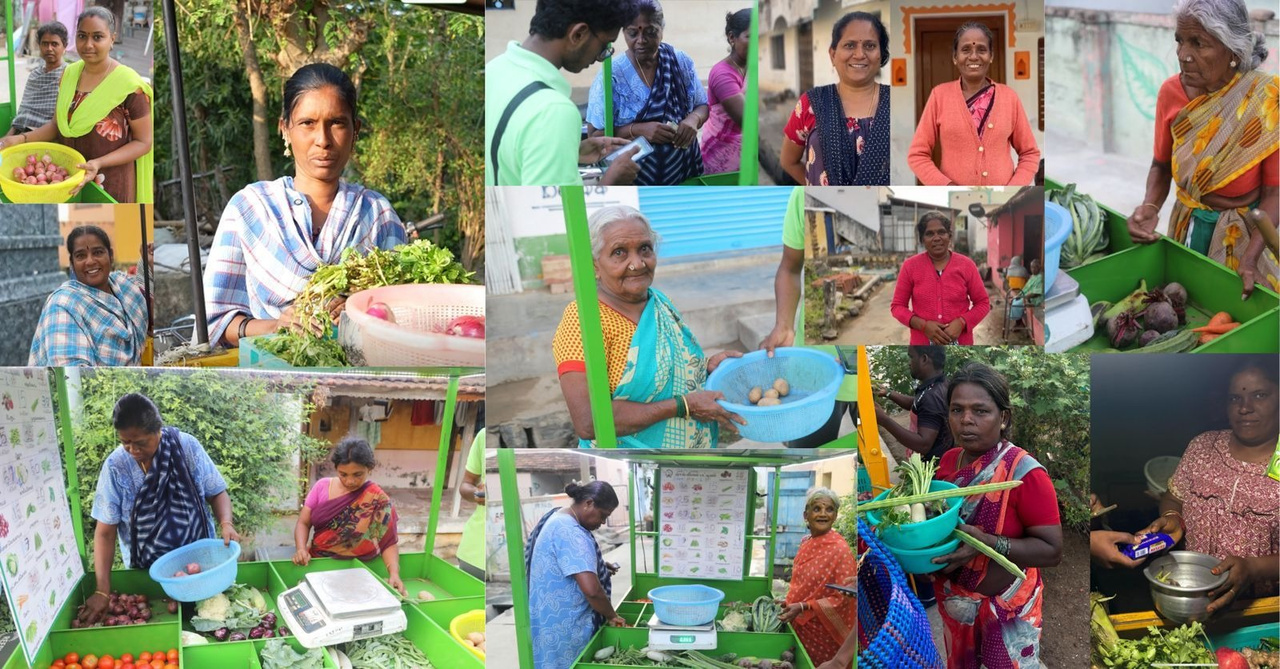
Wheelocity makes trips into the village twice a day. More than 1,500 electric carts cover around 5000 villages in Tamil Nadu and reach over 1 million households. Each cart is run by a local partner, a Bhuvanesh, who operates it as his own shop rather than just a delivery run. Many were working construction in towns ten or fifteen kilometres away, living on site and rarely seeing their families. Wheelocity offers competitive earnings at home, and most stay on, a rare feat in logistics that manages recruitment costs and builds deep local trust.
The two runs are not the same business. The morning cart arrives between 5-9 am, while the day’s cooking is still being decided, which is what makes fresh produce indispensable rather than merely convenient. The evening cart arrives between 4-8 pm, when family members are back and the day’s wages are in hand. Running both doubles the utilisation of every cart and every partner without doubling fixed costs, and once Wheelocity owns daily touchpoints in a village, it has an immediate and highly localised brand recall.
Strategically, the morning run creates the habit, and the evening run builds the margin with packaged FMCG, staples, snacks, clothing, home essentials, etc. In business terms, this two-run model drives expanding Customer Lifetime Value (LTV) with near-zero incremental Customer Acquisition Cost (CAC). Wheelocity is competitive with the mandi, and each transaction is confirmed by an OTP, which settles an old suspicion in local markets that the price was made up on the spot.
In these markets profitability depends on efficiency, and Wheelocity’s efficiency comes from data. Predictive models run on household-level consumption: the system knows which household buys brinjal at seven, that the woman leaves to teach at half past, and what that same family wants on the cart in the evening. It plans routes, forecasts procurement, and holds wastage in the hardest category in retail to a fraction of the industry norm. And because this intelligence is codified and AI-led, a new partner inherits it rather than rebuilding customer relationships from scratch.
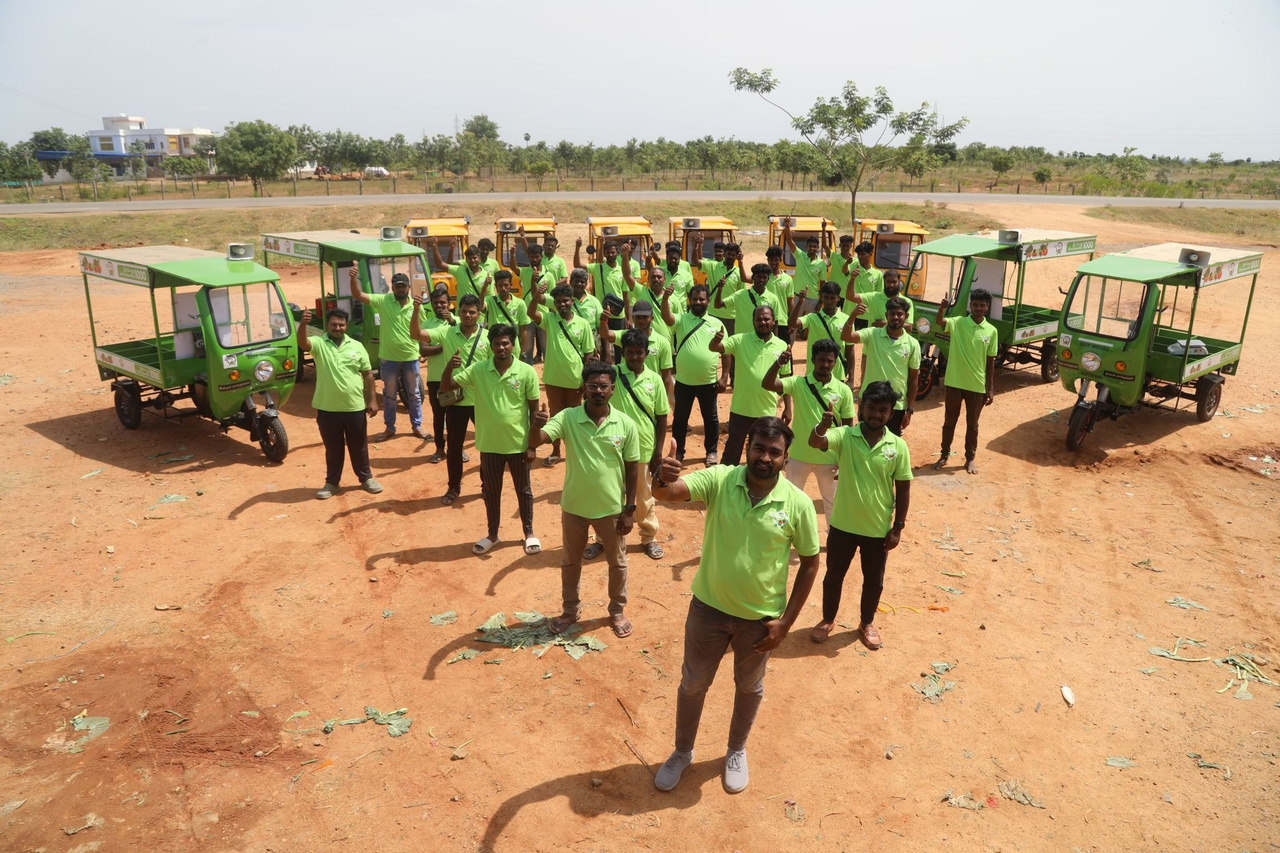
A trusted brand at the doorstep twice a day is a cross-selling channel that does not otherwise exist in these markets. What the cart cannot carry such as, services, high-value goods and catalogue items, can sit on the Bhuvanesh’s phone, shown on the morning run, chosen during the evening run, and delivered the next day. Digital adoption arriving through a phygital model is what excites us most.
By capturing real-time consumption across two daily runs, Wheelocity gains direct insight into the economics of the household and its cash flows, not easily available with other business models. This positions the company to layer in new products and services over time, well beyond groceries.
We look for founders who hold two things at once: ambition for a very large market, and an unparalleled working knowledge of a customer’s daily cash flows. Selvam VMS spent six years at Butterfly running national sales and distribution through rapid scale, then built and exited a logistics and supply chain services business. His career has been spent on the operating side of distribution, which is where a business like this is won or lost. Even today, he periodically drives both the morning and evening routes to sell directly to customers, an operating instinct we deeply align with.
The demand in rural India has always been there. What has been missing is a reliable, high-utilisation way to reach it. We are glad to be partnering with Selvam and the Wheelocity team as they scale it.